

Dr. Pamelia Riviere
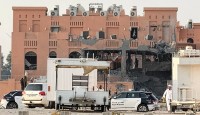
On September 9, 2025, Hamas reported that five of its members were killed in an Israeli air strike in Doha, Qatar, during a meeting to discuss a ceasefire in Gaza. Israel Prime Minister Netanyahu justified the attack, claiming it targeted senior Hamas leaders responsible for the October 7 attack on Israel. Qatar condemned the strike as a violation of international law. While Hamas stated that its negotiating delegation survived, it confirmed the deaths of six individuals, including key figures associated with the negotiation efforts and a Qatari security official. Israeli President Isaac Herzog supported targeting Hamas leadership and indicated that Hamas chief negotiator Khalil al-Hayya was among those targeted.
Qatari Prime Minister Mohammed bin Abdulrahman bin Jassim Al-Thani Prime Minister Al-Thani addressed Israel’s attack in Doha in an exclusive interview with CNN’s Becky Anderson. Prime Minister responded to Netanyahu recent threats following the attack in Doha. He stated that the Hamas office was established following a coordination request from the Americans and the Israelis. They have been using it as a communication channel for many years. "I am sorry to hear from any Israeli politician who is trying to portray himself as being uninvolved. This happened under Netanyahu’s government, Bennett’s government, Lapid’s government, and again under Netanyahu’s government. Any agency claiming they are not involved is not telling the truth. Mossad, Shin Bet, and the Ministry of Defence were all involved in this," he said.
Therefore, there is no justification for branding this as harbouring terrorism. This is a reckless claim." On September 9, 2025, a report from NBC detailed a striking development involving the Israel Defence Forces and the Shin Bet intelligence agency, which announced the execution of a “precise strike targeting the senior leadership of the Hamas terrorist organization.” In the wake of this highly calculated operation, Israeli President Isaac Herzog took to the social media platform X, where he subtly hinted at the potential involvement of al-Hayya, who has been identified as a key figure within Hamas.
Al-Hayya notably took on the role of chief negotiator for the militant group following the assassination of former Hamas leader Ismail Haniyeh in Iran the previous year, marking him as a pivotal figure in the ongoing Gaza war. Al-Thani went on to question whether Netanyahu has the right to attack a sovereign nation that is hosting negotiations. "This undermines our sovereignty and infringes upon it. It also undermines the entire negotiation process and the efforts of the U.S.," he continued. "This is a country that has hosted the Central Command. How have we not considered that there should be a minimum level of manners and ethics in this matter;
Al Thani noted that while Qatar mediated US negotiations with the Taliban without being attacked by the US, Israel attacked a sovereign country and killed five Hamas leaders, including a 22-year-old Qatari security man. Under international law, launching an attack on a nation is not just considered aggressive—it’s viewed as an act of war and can be classified as terrorism. This raises significant moral and legal questions about the consequences of such actions in our interconnected world. People around the world are beginning to see the truth after the devastating events in Gaza and vicious military attacks in the sovereign nation of Qatar. For the last 30 years, it was a good try by Benjamin Netanyahu to portray Muslims and Arabs as Terrorists.
Muslims are terrorists Across the globe, a growing awareness is emerging in the wake of the devastating events in Gaza. People are starting to see Muslims not through the lens of terrorism, but as victims in a broader narrative. A particularly striking revelation is on the horizon—after nearly 24 years, Charles Tucker is poised to unveil that the 9/11 attacks were a fabricated myth, orchestrated not only by Muslim extremists but also by other hidden factions who had prior knowledge of the sinister plan. Shockingly, these parties chose not to intervene, allowing the tragic events to unfold unimpeded. In the aftermath of 9/11, millions lost their lives in Afghanistan, thousands were imprisoned, and an entire region was plunged into chaos and ruin, highlighting the devastating consequences of this dark chapter in US military history. Yesterday, Israel launched a series of military strikes against seven countries within a span of just 72 hours. The targets included Lebanon, Syria, Yemen, Tunisia, Qatar, as well as Palestine, which includes Gaza and the West Bank.
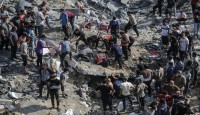
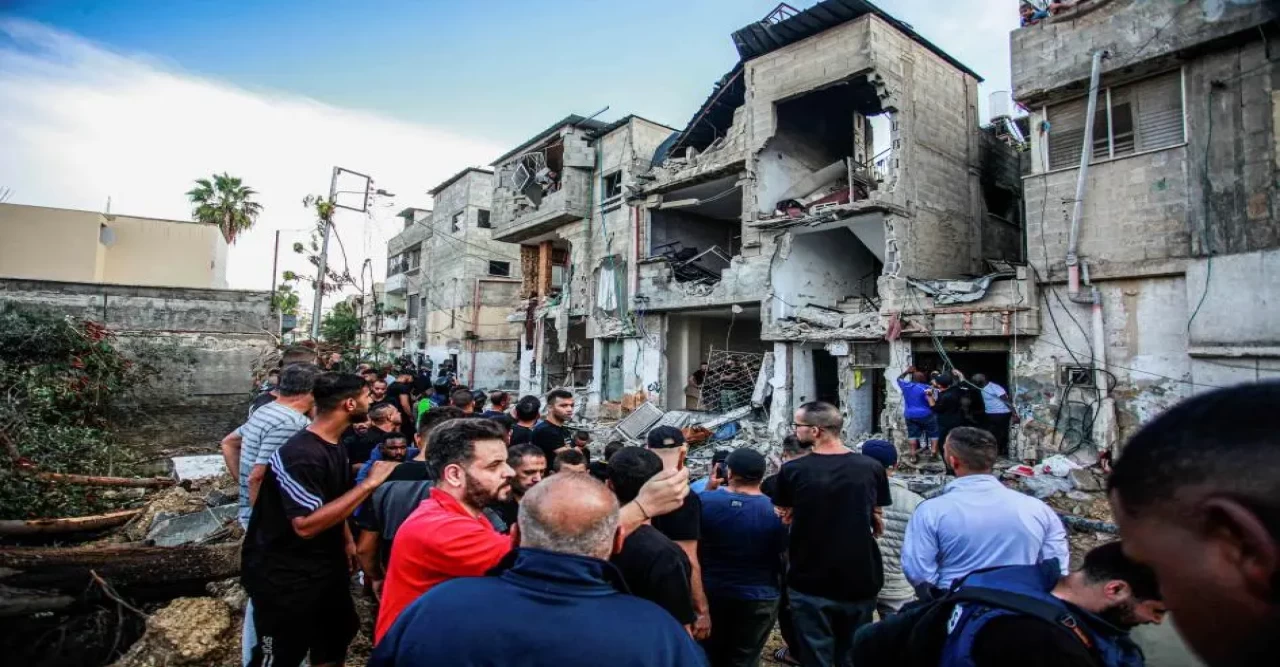
This escalation comes in the wake of a prolonged conflict in Gaza that has lasted for 23 gruelling months. Israel is committing heinous crimes like genocide in Gaza, culminating in the tragic loss of countless innocent civilian lives. Despite the evident violations of international law, Israel often seems to navigate these circumstances with relative impunity, bolstered by robust military support from the United States. The situation raises serious concerns regarding the impact of geopolitical alliances on the humanitarian crises unfolding in the region. Worldwide protests against the Genocide in Gaza and Free Palestine Younger generations in America and around the world are increasingly expressing sympathy for the massacre of the innocent children, women and men in Gaza.
A troubling rise in antisemitism has unfortunately accompanied this shift in sentiment, now more pronounced than ever, fueled by the graphic images and reports of atrocities occurring in the region. Israel boasts a highly advanced military, leveraging cutting-edge technology and strategic prowess. However, it faces significant challenges in achieving a decisive victory in the ongoing conflict. In contrast, Hamas lacks air and naval capabilities and relies mainly on guerrilla tactics to mount its resistance. The stark disparity in military strength paints a complex picture of the current situation, underscoring the profound struggles faced by all parties involved. To achieve a quick victory in this imbalance Gaza war, Netanyahu devised a focused strategy aimed at executing a substantial ground offensive in Gaza, intending to seize control over the region.
The current status of the Gaza ceasefire is precarious, with ongoing tensions and hostilities in the region. Recently, following the attack in Doha, it appears that Prime Minister Netanyahu was prepared to sacrifice hostages from the very first day of the conflict. This raises serious concerns about whether humanitarian considerations have taken a backseat to strategic military objectives. There is a growing discourse about the ethical implications of such a stance, particularly as lives are at stake and the potential for negotiations hangs in the balance. Netanyahu continued pounding thousands of tonnes of bombs across Gaza since the first day of the Gaza war. The situation regarding the hostages remains critical, as they are believed to be held underground in Gaza. Despite calls for a ceasefire plan from Trump, Netanyahu appears to be distancing himself from those proposals.
Today, in an interview with Piers Morgan, Professor Jeffrey Sachs highlighted notable similarities in how the U.S. CIA compensated Osama bin Laden and how Hamas receives funding from Israel, facilitated by Qatar. He pointed out that, like bin Laden, who was killed on Pakistani soil without permission for the strike, Israeli Prime Minister Netanyahu ordered the assassination of senior Hamas leaders who had convened in Doha for ceasefire discussions. Negotiators are key players in diplomatic discussions. Each time Israel targets negotiators, it undermines the negotiation process. For instance, when Iran was making headway in talks with the U.S., Netanyahu initiated a 12-day military campaign to derail those negotiations.
Israel has the capability to carry out lethal actions at any time and in any location. Professor Jeffrey Sachs further says why the U.S. is supporting Israel, even concerning the Epstein files? It seems to be influenced by AIPAC funding, which does not align with U.S. interests. Just yesterday, Trump stated that attacking Qatar is not in the U.S.'s best interest. However, which country can truly feel safe when the U.S. gives Israel a blank check? No country is secure: Lebanon, Syria, Yemen, Egypt, or Qatar. Sachs criticized Trump for sending mixed messages about the potential attack on Qatar. While he claims it is not in the U.S. interest, he also stated that Hamas should be removed.
The president of the United States stated that the airstrike on a residential compound in Doha, where the Hamas negotiating team was convening to talk about the latest ceasefire proposal from the US, did “not promote the objectives of Israel or America.” Will Trump's frustration make any difference? Sachs argues that it won't, as this is essentially a job for Mossad and the CIA. Trump's anger is unlikely to change anything about the future of Gaza. Worldwide peace activists are protesting On March 18, 2024, Democracy Now! reported that Rachel Corrie, a 23- year-old US peace activist, was killed by an Israeli soldier driving a military bulldozer on March 16, 2003, while in Rafah with the International Solidarity Movement.
She was monitoring human rights abuses and protecting Palestinian homes when the incident occurred. To date, nobody has been held accountable, with the Israeli military deeming it an "accident" and the Supreme Court of Israel rejecting an appeal from her parents in 2015. Rachel Corrie has become a symbol of solidarity with the Palestinian people, and her legacy is seen as crucial in addressing ongoing conflicts, according to her friend Tom Dale, who witnessed her final moments. Protest in Tel Aviv: On August 18, 2025, hundreds of thousands demonstrated in Tel Aviv, calling for an end to the war in Gaza and the release of hostages. The rally followed nationwide protests and a general strike aimed at pressuring the government to stop military actions. The Hostage and Missing Families Forum estimated around 500,000 participants, demanding a comprehensive agreement to end the conflict.
Protesters blocked roads and clashed with police, resulting in over 30 arrests. Prime Minister Netanyahu criticized the protests, stating they hindered negotiations with Hamas and could lead to further violence. Protest in Sydney and Melbourne: On August 24, 2025, The Times of Israel reported that a large number of Australians participated in pro- Palestinian, anti-Israel demonstrations on Sunday, amid escalating tensions between Canberra and Jerusalem, with protesters calling for the cessation of the conflict in Gaza and sanctions against Israel. In recent weeks, relations between Australia and Israel have been strained following the center-left government’s choice to acknowledge a Palestinian state and the cancellation of an entry visa for Israeli far-right MK Simcha Rothman. According to the Palestine Action Group, over 40 protests occurred around Australia on Sunday, with significant crowds in Sydney, Brisbane, and Melbourne.
The group indicated that approximately 350,000 people joined the rallies across the nation, including about 50,000 in Brisbane, although police estimated the local attendance to be around 10,000. Police did not provide estimates for the crowd sizes in Sydney and Melbourne. Protest in London, Paris, Rome, Manila, Cape Town, and New York City: On October 6, 2024, Reuters reported that numerous protesters flooded the streets in major cities globally on Saturday, calling for an end to the violence in Gaza and the broader Middle East as the anniversary of the deadly Hamas assault on Israel approaches. Approximately 40,000 supporters of Palestine marched through central London, while thousands congregated in Paris, Rome, Manila, Cape Town, and New York City.
Protests also took place near the White House in Washington, denouncing U.S. backing for Israel’s military actions in Gaza and Lebanon. On September 6, 2025, The New York Times reported that over 800 individuals were detained in London on Saturday under UK terrorism legislation during a demonstration opposing the government’s choice to prohibit a pro-Palestinian activist organization. The organization, Palestine Action, was classified as a terrorist group in July after two of its members trespassed into a British military facility and caused damage to aircraft in protest of the UK's military support for Israel. This marked the first time a group was banned under a portion of Britain’s legal definition of terrorism that pertains to significant property damage, rather than acts of violence against individuals, to promote a political agenda.
The classification aligned Palestine Action legally with groups like Al Qaeda and criminalized membership or participation in the organization, along with some public expressions of support. The arrests on Saturday heightened the clash between British authorities and Palestine Action supporters regarding the application of the terrorism law to protests, which are typically a protected form of expression in the UK. Frustrated Benjamin Netanyahu does not want a peace treaty Israel is grappling with profound challenges and a cloud of uncertainty regarding the situation in Gaza and the complex dynamics of Hamas's role following the war. Frustrated by the inability to secure a decisive victory against Hamas, Netanyahu has shifted the approach to one marked by starvation, widespread devastation, and relentless aerial assaults.
These attacks target the vulnerable populations desperately seeking refuge in high-rise buildings, makeshift tents amidst the rubble, and even in the open sky, as well as in schools and hospitals that have become sanctuaries in this chaotic landscape. Despite the evident violations of international law, Netanyahu often seems to navigate these circumstances with relative impunity, bolstered by robust military support from the United States. The blame game, Arabs as terrorists, and the Gaza situation raise serious concerns regarding the impact of geopolitical alliances on the humanitarian crises unfolding in the region.
Dr Pamelia Riviere is a freelance writer and analyst.