

Sultan H. Chowdhury
The Permanent Mission of Bangladesh to the United Nations is not merely a platform for presenting state positions. It is also a visible interface between the country and its diaspora, the media, cultural actors, and the broader international community. In an era defined by digital diplomacy, what is needed is not a quiet, closed posture, but an open, people-centered, and visibly engaged diplomatic presence. Diplomacy in New York does not remain confined to conference rooms. A country may be heard through its statements, but it is judged through its conduct. How open, confident, accessible, and people-oriented a state appears is often reflected in how its permanent mission operates. In today’s environment, effectiveness alone is not enough; it must be accompanied by visible public diplomacy.
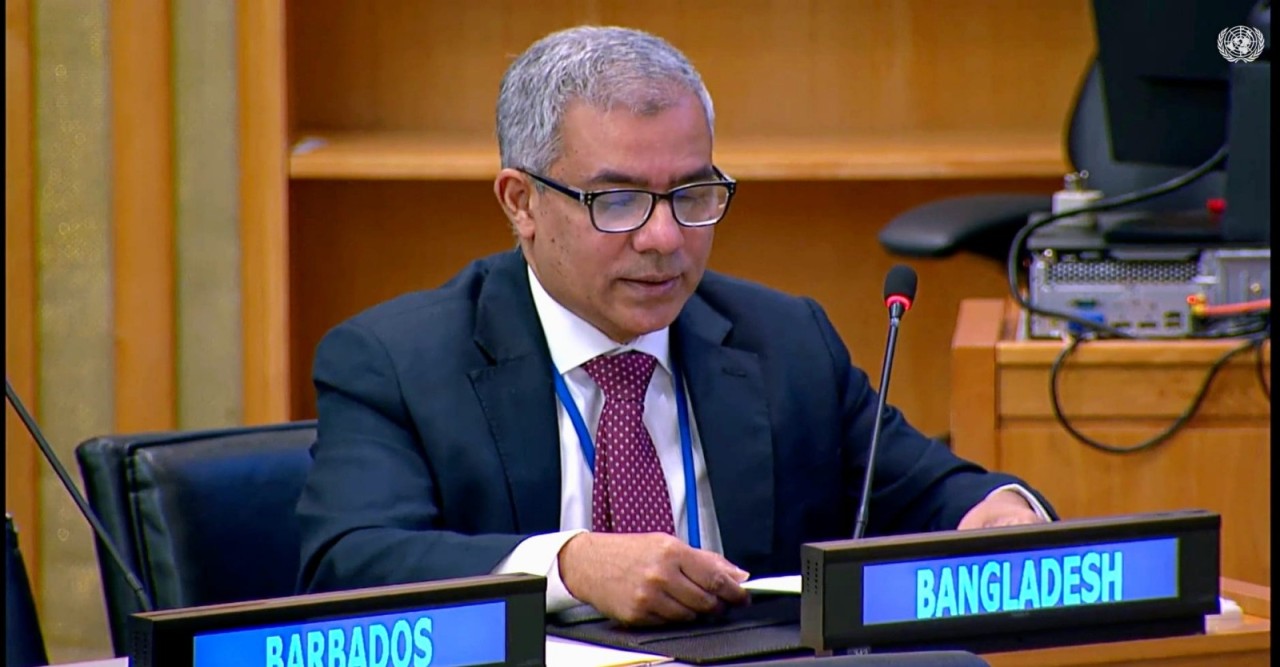
Bangladesh’s Permanent Representative formally assumed office on January 13, 2025, presenting credentials to António Guterres on the same day. More than a year later, segments of the Bangladeshi diaspora in New York have begun discussing the mission’s diplomatic visibility, outreach, and engagement with the community. This is not unusual. Diaspora communities do not want to observe their state from a distance; they want to be seen, heard, and respected by it. This is not a simplistic critique of an individual. It raises a broader diplomatic question: in today’s world, is the role of a permanent representative limited to articulating state positions, or does it also require building consistent, visible, and meaningful relationships with people?
Historically, Bangladesh’s mission in New York has never functioned as a purely diplomatic office. It has been a hub of connection for expatriate Bangladeshis, journalists, cultural figures, researchers, international partners, and diplomats from other countries. National days such as Independence Day, Victory Day, and International Mother Language Day were often marked by events that combined official protocol with genuine public participation. For many, it felt like a “mini United Nations,” where Bangladesh presented itself not only as a state, but as a composite of history, culture, and people. That legacy makes present comparisons unavoidable. According to some observers within the community, the past year has seen a relative decline in large-scale cultural engagement, open dialogue, regular interaction with Bangla and international media, and visible relationships with diaspora leadership.
Accounts suggest that at certain events, after delivering remarks, the Permanent Representative has withdrawn into smaller, closed settings with select associates, limiting opportunities for broader interaction with guests, community members, and invitees. Others point to comparatively limited networking with Bangladeshi professionals working within the United Nations system and the wider diplomatic community in New York. Whether each of these observations is equally verified is an important question. But there is another reality in diplomacy: perception itself carries weight. People do not judge diplomacy solely through official documents. They assess it through presence, behavior, courtesy, accessibility, and the warmth of engagement. If distance is felt, that distance becomes politically meaningful. Diplomacy today is no longer defined by closed-door negotiations alone.
A country’s image is shaped by a combination of formal positions, public engagement, media relations, cultural visibility, digital presence, and its relationship with its diaspora. In a city like New York, where every state is both observed and interpreted, visibility itself becomes a message. Of course, diplomats differ in style. Some are comfortable with high visibility; others prefer restraint. Quiet diplomacy has its place, especially in sensitive multilateral negotiations where not everything can or should be public. The problem arises when quiet diplomacy turns into invisible diplomacy. When representatives become inaccessible to citizens, when media engagement weakens, when communities feel overlooked, silence no longer appears strategic. It begins to look like distance. In the age of digital diplomacy, even absence communicates something.
At the heart of this discussion lies not only public diplomacy, but also the idea of people’s diplomacy. Public diplomacy extends the state’s hand toward the public. People’s diplomacy goes further: it recognizes the public itself as part of the state’s diplomatic strength. Every Bangladeshi living in New York, especially those active in journalism, academia, culture, business, the UN system, or community leadership, functions as an informal representative. They speak about Bangladesh, carry its identity, and often project the country faster and more widely than official channels. In that sense, every Bangladeshi in New York is, in effect, a “people’s diplomat.” Engagement with them is not merely a matter of courtesy; it is strategic. If the mission treats the diaspora as occasional guests at formal events, it overlooks a significant source of strength.
But if it integrates them into a meaningful value chain, that relationship can reinforce state diplomacy itself. This value chain involves continuity of communication, listening, respect, participation, and structured engagement. Inviting diaspora members to formal events is not enough. Their experiences, contributions, questions, and capacities must be acknowledged. When national day events are reduced to invitations alone, the relationship remains superficial. When people feel meaningfully included, it becomes durable. Respect, in this context, carries a specific meaning. It is not limited to greetings on a stage. It involves listening, giving time, recognizing contributions, ensuring visible inclusion in state events, and treating the diaspora as a strategic asset.
So what can be done? First, regular and open dialogue with the Bangladeshi diaspora is essential. A few large events each year are insufficient. Smaller roundtables, professional exchanges, youth discussions, and media briefings can be far more effective. Second, national day celebrations should become more inclusive. They should not be confined to protocol but should create space for shared ownership with the diaspora. Third, building a professional, consistent, and information-driven relationship with the media is crucial. Avoiding the media is not always a safe strategy; structured engagement enhances credibility. Fourth, a more organized network could be developed with Bangladeshi professionals working across UN agencies and within New York’s broader professional landscape. They are not substitutes for the mission, but they can be a real source of strength. Fifth, digital presence must be taken seriously. Visibility today is not only physical. Messages, speeches, images, participation, updates, and public-facing information all form part of diplomacy.
Digital silence can easily be interpreted as absence. A caution is necessary here. Public diplomacy is not a popularity contest. It is not about photo opportunities or social media performance. Its purpose is to build trust, reduce distance, recognize people as stakeholders, and make the state accessible. Bangladesh’s diplomatic tradition has historically balanced professionalism with human connection. It combined formal statecraft with social openness. The challenge today is to renew that balance under new realities. The current Permanent Representative could view these discussions not as hostile criticism but as a constructive call. People question those from whom they expect more. If the diaspora seeks a more visible, warmer, and people-centered diplomatic presence, that is not a negative signal. It reflects trust.
Ultimately, the question is simple. Will Bangladesh’s diplomacy in New York be merely effective, or will it also be visible, inclusive, and people-centered? In the age of digital diplomacy, this is no longer a question that can be deferred. What is needed is a diplomatic presence that understands the value of discretion but does not lose its connection with people. A mission that represents not only the state, but also its people. A form of people’s diplomacy that treats the diaspora not as spectators, but as a living strength of Bangladesh. Because in New York, every Bangladeshi is an informal envoy. And the most sustainable diplomacy lies in building respectful, consistent, and meaningful relationships with them.



.jpg)