


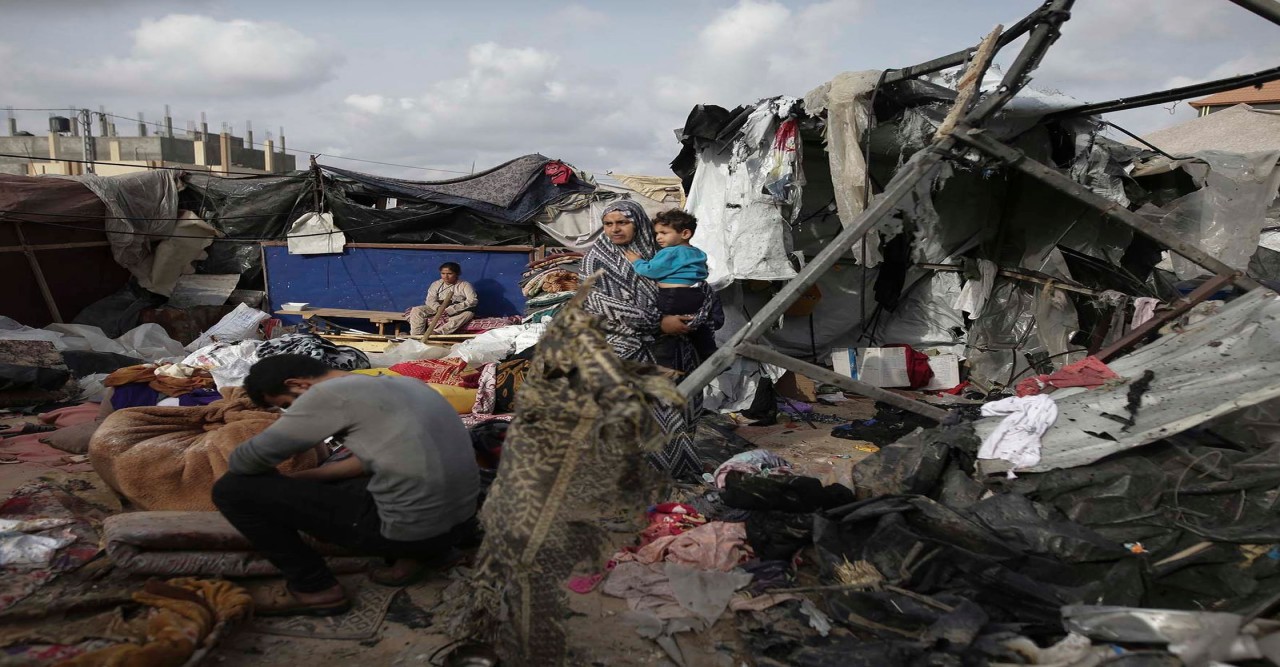
Never Again? Gaza Genocide Continues!
Is this a vague ceasefire? Will Palestine ever gain freedom?
Dr. Pamelia Riviere
Democracy Now! reported on December 2, 2025, that Israeli forces killed two Palestinian teenagers in separate incidents during military raids across the occupied West Bank on Monday. In Hebron, soldiers fatally shot 17-year-old Muhannad Tariq Muhammad al-Zughair, who was accused by the military of carrying out a car-ramming attack that injured an Israeli soldier, although details surrounding the alleged incident remain disputed. In a separate raid northwest of Ramallah, 18-year-old Muhammad Raslan Mahmoud Asmar was shot, with eyewitness accounts indicating that he was denied medical assistance. Reports claim that Red Crescent medics were barred from approaching the scene as Asmar lay gravely injured, ultimately leading to his death from excessive blood loss. Following the incident, Israeli forces reportedly seized his lifeless body, further heightening tensions in the area.
In the context of ongoing violence, the United Nations reported last week that since October 7, 2023, Israeli settlers and soldiers have killed more than 1,000 Palestinians in the occupied West Bank and East Jerusalem. This alarming figure raises significant concerns regarding human rights and the implications of the sustained conflict in the region.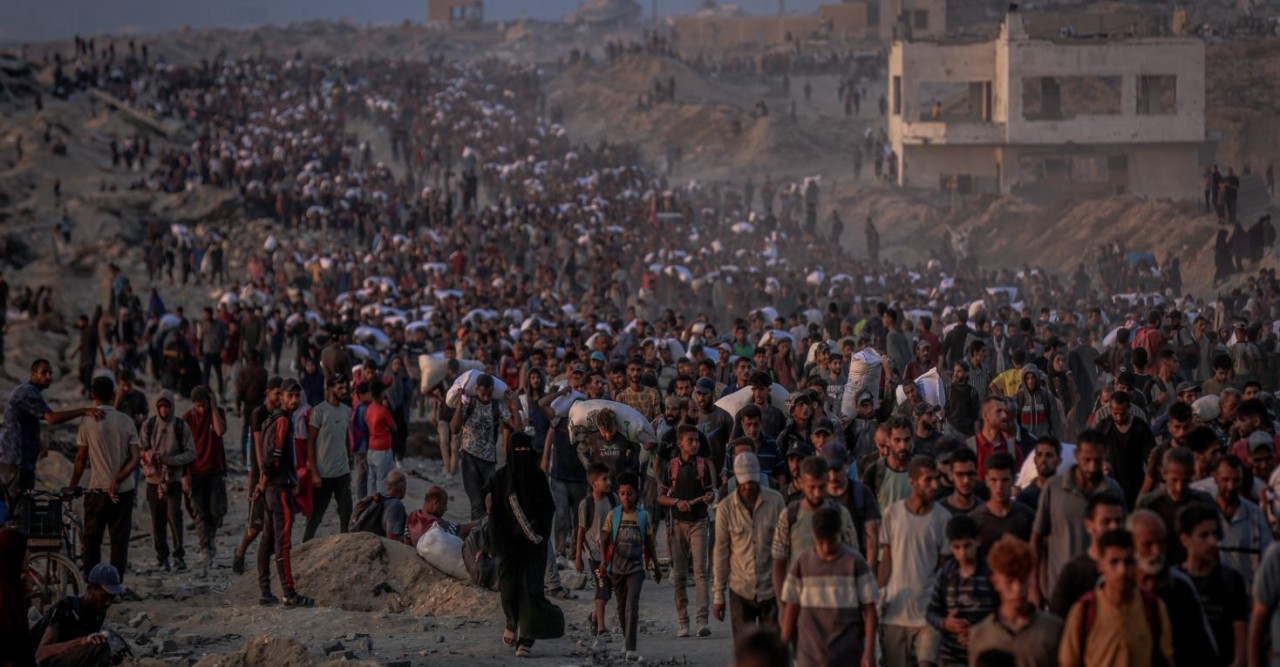 Holocaust Never Again! Gaza Genocide continues
Israel asserts the principle of "Never Again!" as a commitment to preventing another Holocaust against the Jewish people. However, this conviction appears to stand in stark contradiction to the ongoing violence against Palestinians, particularly in Gaza. Reports indicate that Israeli forces routinely inflict suffering upon the Palestinian population, with indiscriminate attacks targeting children, women, and men alike. Recent data shows that Palestinian fatalities continue to rise significantly. The Israeli Defence Forces (IDF) have openly acknowledged their involvement in these violent actions. On November 20, 2025, military operations led to the deaths of at least 32 Palestinians during a series of assaults that blatantly disregarded the ceasefire agreement established in October with Hamas.
Among the deceased were at least ten individuals from a single family, tragically killed when Israeli forces bombed a building that was sheltering displaced Palestinians in the Zeitoun neighbourhood of Gaza City.
Further reports from November 24, 2025, indicate that the Israeli military has initiated a new wave of attacks across Gaza, despite the ceasefire that had been in place for over a month. Eyewitness accounts detail airstrikes and the use of tank and artillery fire in various locations, including the Bureij and Maghazi refugee camps, as well as the southern cities of Rafah and Khan Younis. Disturbingly, one incident involved Israeli forces shooting and killing a displaced Palestinian, highlighting the ongoing violations of human rights amid the proclaimed ceasefire. 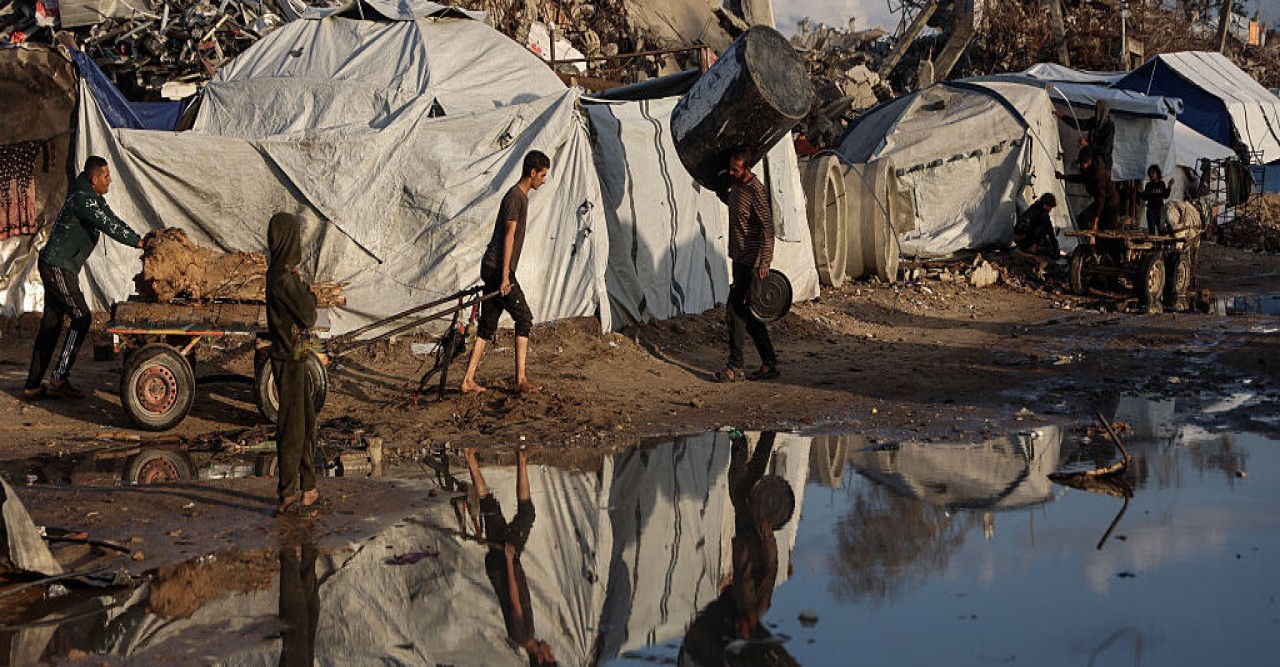 UNICEF highlighted the dire situation for children in Gaza, reporting that at least 67 children have died due to IDF fire since the ceasefire began on October 10, averaging two child fatalities per day during this period of supposed reprieve. On Saturday, November 24, 2025, Gaza held funerals for 24 Palestinians who lost their lives due to Israeli airstrikes—strikingly out of step with the U.S.-brokered ceasefire initiated on October 10. In total, Gaza's Government Media Office reported that Israel has committed nearly 500 violations of the ceasefire agreement over just 44 days, underscoring the urgency of this humanitarian crisis (Democracy Now!)
Israel’s war of extermination in Gaza has been imported to the West Bank
The killing of two unarmed Palestinian men as they surrendered to Israeli soldiers in the occupied West Bank city of Jenin is the latest example of a practice that, while shocking, is not unusual. Al Jazeera reported on November 28, 2025, that Palestinians were killed after Israeli forces opened fire on individuals who were reportedly approaching soldiers near an agreed-upon ceasefire line in northern Gaza. This is because Israel has long maintained a ‘shoot to kill’ policy when it comes to Palestinians, even unarmed. While the capture of the Jenin killings on camera has made the case particularly stand out, it follows a long-standing pattern of behaviour. Entire Palestinian communities have been forced into lockdown in parts of the occupied West Bank, a human rights group warns, as the Israeli military continues conducting large-scale, deadly raids in the territory. However, this raises a critical question: why is the immediate response to shoot and kill people simply for approaching? It’s important to remember that those were civilians caught in a conflict, and those Palestinians were unarmed. Looking back, an Israeli drone strike killed five people returning to check on their homes in Gaza’s eastern Shijaya neighbourhood. A separate strike killed one person and injured another near Kunis. Israel had agreed to refrain from offensive military operations during the ceasefire, stating it would only conduct defensive actions. Therefore, their justification for killing any Palestinian will likely be framed as a matter of self-defence. It’s also worth noting that they continue to restrict international journalists' access to the Gaza Strip, where investigative reporting could reveal the truth behind conflicting narratives. This situation remains dire.
The Greater Israel plan has been rooted in Zionism since its beginning
Will the ceasefire hold? Secondly, will a genuine peace agreement be achieved by the end of this process? Is there no possibility of reaching a peace agreement?
According to international relations scholar Professor John Mearsheimer, the chances of this ceasefire holding are very low. In an interview on Piers Morgan's show on October 14, 2025, Mearsheimer stated, "I think the chances that this ceasefire will hold are not good at all." He explained that the concept of ethnically cleansing a greater Israel has been embedded in Zionism from its inception. This is evident from the massive ethnic cleansing that occurred in 1948 and 1967. Following the conflict in 2023, he noted that the Israelis often view major wars as opportunities for ethnic cleansing.
Mearsheimer also pointed out that the United States is unlikely to cut off aid to Israel, indicating that such a scenario is unlikely. He highlighted that President Trump has never suggested he would do this. When President Trump said to Benjamin Netanyahu, "If you don't accept a two-state solution, I will cut off all aid," he added, "Then I will apologize to you and say that you were right and I was wrong."
Amid the positivity and relief surrounding the prospect of peace in Gaza, not everyone has welcomed the sight of the U.S. president honouring Prime Minister Netanyahu in the Knesset and requesting that he be pardoned.
The fact remains that more people than ever, including some of Trump's base, are deeply uncomfortable with Israel's influence on U.S. politics and skeptical about the prospects for lasting peace while Netanyahu remains in power.
There are two significant questions: Who will run Gaza?
In other words, will there be Palestinian self-determination? Will the Palestinians govern Gaza? That's the first question.
The second question is about the political horizon: what is the endgame here?
Regarding the question of who will run Gaza now, it seems unlikely that the Palestinians will be in charge. It appears that President Trump, along with Tony Blair and some neighbouring Arab armies, will provide security, but the Palestinians are not going to achieve self-determination. More importantly, in terms of the long term, it looks like there won't be a two-state solution. There's no viable political solution at this point, so the conflict is likely to continue. While I express a somewhat pessimistic view, others involved in negotiations believe there is a genuine opportunity and a collective will from neighbouring Arab and Muslim countries—including Turkey, Egypt, the UAE, Qatar, and Saudi Arabia—to push for a two-state solution stemming from the challenges of the past two years.
Why are the Palestinians skeptical?
Prime Minister Netanyahu has made it abundantly clear on numerous occasions that there will not be a two-state solution. However, what if he changes his stance? This viewpoint is widely shared in Israel, and after the events of the past two years, it’s hard to imagine many Israelis being interested in a two-state solution—perhaps only a handful. The reality is that Israel has effectively annexed Gaza and the West Bank.
The idea of ethnically cleansing Palestinians to establish a greater Israel has been rooted in Zionism since its beginning, as Professor Mearsheimer mentioned. Their main goal now seems to be the ethnic cleansing of Palestinians from these areas. The notion of ethnically cleansing a greater Israel has been part of Zionism from the very start, which contributed to significant ethnic cleansing during 1948 and 1967. After the war in 2023, the Israelis have historically seen major conflicts as opportunities for further ethnic cleansing, and they appear to be pursuing that now. However, I would offer two points that might challenge this rather grim narrative. First, President Trump has staked his reputation and legacy on achieving lasting peace. As he said on Air Force One last night, this is the most important moment of his life. He seems committed to bringing about lasting peace and is crucial to Israel’s ability to continue its military actions against Hamas or to carry out the ethnic cleansing of Palestinians. He has made it clear that there can be no annexation of the West Bank and that Palestinians must be allowed to return home. So, I find some encouragement in that.
A two-state solution or the same governing body in Gaza and the West Bank?
There’s a secondary economic issue to consider. Before October 7th, Saudi Arabia was signalling a desire to join the Abraham Accords, which would involve significant financial commitments.
Professor John Mearsheimer notes that a key question is who will govern Gaza in the future. If you are a Palestinian, whether affiliated with Hamas or not, you want the power to determine your own future. You want to manage your own politics. However, under the arrangement that President Trump has proposed, the Palestinians do not have control over their own governance. Trump has indicated that, eventually, the Palestinian Authority, once "re-educated," could take over in Gaza. From a Palestinian perspective, this raises concerns. It suggests that President Trump will decide who governs Gaza, which is unacceptable to Palestinians.
This fundamental issue persists: nobody in the West, and certainly not the Israelis, seems willing to let the Palestinians decide their own fate or establish a state of their own. As long as that is the case, this conflict is likely to continue, especially given the current leadership in Tel Aviv. It should also be noted that Netanyahu has employed a policy of divide and rule between Hamas and the Palestinian Authority since 2006. He seemed either oblivious or oddly unconcerned by the fact that the billions of dollars he funnelled to Hamas were being spent on an elaborate tunnel system. It’s extraordinary that he appeared unaware of the potential consequences leading up to October 7th, particularly given the capabilities of the Mossad.
The only logical way forward appears to be establishing a unified government in both the West Bank and Gaza, rather than maintaining separate Palestinian governments. Experience has shown that having two governing bodies can lead to significant instability, which may have been Netanyahu's intention, though he didn't fully grasp how severe the situation could become. Isn’t there a rational argument for a single governing body in both regions? Yes, that makes sense. If you advocate for a two-state solution, as many do, you would want the Palestinian Authority to govern not only the West Bank, where they currently hold power, but also Gaza.
It’s essential to recognize that Benjamin Netanyahu prefers Hamas to remain in control of Gaza because he opposes a two-state solution. He has made it clear to President Trump that he does not want the Palestinian Authority to take over Gaza, as he fears that would lead to movement towards a two-state solution, which he resists. This presents a significant challenge; the main opposition to a two-state solution originates from Israel.
An Israeli drone attack killed two Palestinian boys, aged eight and 10, in Bani Suheila, east of Khan Younis. The Israeli army stated it had killed more than 40 Palestinians over the past week in operations targeting tunnels near Rafah in the Gaza Strip, Al Jazeera reported on December 01, 2025.
Too many innocent children and adults lost their lives at the hands of Israeli forces even after the ceasefire in Gaza, casting further doubt on the effectiveness of what has become a vague and fragile ceasefire.
The writer is a freelance analyst.