

.jpg)
Israel's Ultimate Dilemma: The Nuclear Gamble Against Iran that Could Change Everything
Dr. Pamelia Riviere
Iran: A Dream Dashed
In the heart of the Middle East lies Iran, a nation that once held the promise of greatness. But the reality has been starkly different, as visions of progress and prosperity have faded into a haunting tale of unfulfilled aspirations. Explore the complexities of a land rich in culture and history, yet marked by challenges that have transformed its dreams into a poignant narrative of disappointment.
The ambitious regime change operation in Iran, orchestrated by the CIA and Mossad, took a surprising turn when fears of a devastating Iranian counter-attack gripped both Pentagon officials and Israeli leaders. What started as a bold dream quickly unraveled, revealing the high-stakes tension lurking beneath the surface of international politics.
As tensions rise in the West Asia, the prospect of a nuclear confrontation looms larger. Could Israel, facing imaginary existential threats, consider a desperate gamble that might not only change the course of history but potentially erase its presence from the global map? Many analysts agree.
Netanyahu’s ongoing strategy aims to weaken Iran for greater Middle East dominance, but this may have significant costs for Israel and globally. The stakes have never been higher, and the implications of such a move are daunting. Dive into the complexities of this critical situation and explore the chilling possibilities that lie ahead.
Regime change strategy: CIA and Mossad insinuated the public
Kim Iversen discusses who Iran intended to execute. According to the U.S. government, these individuals were anti-government protesters. However, Iran insists that they were foreigners and traders. Additionally, Iran has been sharing a lot of footage showing highly trained personnel preparing for assaults. They can be seen loading weapons and hiding firearms beneath their clothing. They are also utilizing satellite communication believed to be connected to foreign intelligence agencies. Many suspect that this involves Mossad.
Iversen mentioned that you can observe that they are attempting to seize buildings and have caused numerous civilian casualties. This situation has escalated into full-scale warfare in the streets—not merely anti-government protesters rising up, but actual armed militias equipped with satellite phones. Thus, many people believe this is tied to Mossad and anti-government militias, which seems credible given that Mike Pompeo and Mossad have acknowledged their presence on the ground.
On January 18, 2026, former UN weapons inspector and military analyst Scott Ritter presents a comprehensive assessment of purported foreign intelligence operations in Iran on The World News podcast. His analysis suggests that the CIA and Mossad infiltrated genuine economic protests to incite a violent revolution and provide justification for a military strike by the U.S. and Israel. According to Ritter, pervasive protests triggered by currency instability, inflation, and economic hardship were surreptitiously influenced by external entities. He contends that Iran’s currency was intentionally targeted, while trained underground groups allegedly assaulted security forces to generate chaos and establish a rationale for escalation.
Ritter describes this approach as part of a larger regime change strategy, which he claims ultimately faltered due to concerns from both the Pentagon and Israeli leaders about a potentially devastating Iranian counter-attack. He asserts that this apprehension led Donald Trump to cancel a planned military strike at the last moment. The analysis also indicates that repeated unsuccessful efforts to destabilize Iran have paradoxically bolstered the Iranian state.
Ritter portrays Iran’s political system as robust, adaptable, and supported domestically, arguing that external pressure has actually enhanced national unity rather than diminished it. Moreover, the discussion emphasizes Russia’s alleged involvement in aiding Iran in dismantling longstanding Western espionage networks, leaving intelligence agencies without the operational influence they once held.
U.S. aircraft carrier is being redirected toward the Middle East
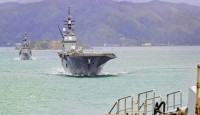
On January 15, 2026, FOX News reported that at least one U.S. aircraft carrier is being redirected toward the Middle East amid escalating tensions with Iran, according to military sources cited by the network. While the specific carrier has not yet been confirmed, speculation suggests it could be the USS Abraham Lincoln, currently conducting operations in the South China Sea, or one of the two other carriers that recently departed from their bases in Norfolk, Virginia, and San Diego, California earlier this week.
Depending on the final destination, the transit time for these naval assets is expected to take a minimum of one week. In addition to the aircraft carrier movement, U.S. military assets from various branches—air, land, and sea—are anticipated to be deployed into the region over the coming days and weeks. This buildup aims to enhance the president's military options should he decide to take decisive action, potentially including airstrikes against Iranian targets, sources revealed. The careful mobilization of resources signifies growing concern over Iran's military activities and its implications for regional stability.
Despite refraining from immediate military action, Trump began deploying a greater military presence in West Asia, including the USS Abraham Lincoln carrier strike group. This buildup raised concerns but was not necessarily indicative of an impending attack.
The future trajectory remained uncertain, hinging on Trump’s personal decision-making and the dynamics within Iran itself. The situation was further complicated by ongoing judicial actions within Iran against protesters, which, if intensified, could provide Trump with a rationale for striking. However, as of now, the external and internal factors remained in a tenuous balance, with Trump's intentions being difficult to predict.
Iran: you strike, we retaliate
Donald Trump has reportedly been told by his aides and Gulf allies that even a large-scale attack on Iran would not topple the regime. Despite the words of caution, the White House maintains that "all options" are still on the table. In a recent interview, Professor Elliot Alhindi commented on the ongoing protests in Iran and the challenges faced by the Iranian leadership. He noted that the regime's popularity has sharply declined among its population, making it increasingly difficult for them to maintain control. The level of violence used against protesters will significantly impact public reaction and the future of the regime. Alhindi emphasized the importance of how the Iranian government engages with other countries, particularly in relation to its commitments. The ability of the regime to assure the U.S. and regional partners that it will alter its behavior—such as ceasing support for militias and halting missile development—will be crucial. Additionally, their willingness to negotiate on the nuclear deal remains a key factor.
The international community's response to these protests could influence the situation, potentially leading to stronger support for the demonstrators or, conversely, allowing the regime to buy time while leaving the protesters to face their challenges alone, as has been seen in previous instances.
Donald Trump aimed to change the regime without using American dollars or risking American lives. He wanted to avoid the direct involvement of U.S. troops, contrasting with the approaches taken in Iraq and Afghanistan, which were unsuccessful. Instead, he sought to follow Israel's lead in attempting regime change through alternative tactics. However, all of these efforts ultimately proved to be failures.
Meanwhile, Iranian state media issued a warning to President Trump tonight: You strike, we retaliate.
The US military had provided President Trump with options for potential strikes but could not ensure that the regime would be toppled.
Donald Trump softens stance on Iran, or it is a bluff
Trump claims he refrained from conducting strikes because Iran ultimately canceled executions. This is what he asserts: Did Arab and Israeli leaders persuade you not to attack Iran? No one persuaded me. I made the decision myself. Just yesterday, there were over 800 executions planned. They executed no one. They called off the executions. That made a significant difference. Therefore, he indicates that it's genuinely motivated by concerns for human rights. What is the actual narrative? It appears that Trump has a strong inclination toward engaging in conflict with Iran. However, he is prepared to make considerable concessions for Israel. He is undeniably acting in their interests.
On January 16, 2026, Firstpost reported statements from Trump’s secretary regarding the escalating tensions with Iran. The White House conveyed that President Trump and his team had warned the Iranian regime of severe consequences if the ongoing killings continued. Notably, Iran had suspended about 800 executions, which Trump perceived as a concession linked to his pressure. Several factors appeared to influence Trump’s decision against military action.
Firstly, Iran's stoppage of the executions seemed to have momentarily alleviated pressure.
Secondly, the U.S. lacked adequate military resources in the region, specifically a carrier strike group, which could deter immediate action. Additionally, Trump’s advisers expressed skepticism about the effectiveness of a military strike, suggesting that it might not topple the Iranian regime and could instigate a broader regional conflict. This sentiment was echoed by Trump's special envoy, Steve Witkov, who advocated for diplomatic solutions.
Finally, advice from allies in West Asia, including Israel and several Arab states, also urged caution against an attack, fearing potential fallout and the stability of their own nations.
Readiness for the upcoming war
Reportedly, the president sought guarantees that any military action would be quick, effective, and would not escalate into a larger conflict in the Middle East. At that time, the US military's readiness in the Middle East was not suitable for a decisive strike, as there had been no aircraft carrier stationed there for the first time in years due to the Pentagon relocating the USS Ford to the Caribbean. As of Wednesday, only three destroyers and three littoral combat ships were present in the Middle East, which is half the number of US warships currently placed in the Caribbean near Venezuela.
Kim Iversen talks on her podcast about the US military preparing to deploy assets to the Middle East, which are likely to involve at least one aircraft carrier along with additional missile defense systems capable of operating from air, land, and sea. Any aircraft carrier could take one to two weeks to reach the Middle East. Additionally, the US had pulled some of its anti-missile systems out of the Middle East after last summer's strike on Iran's nuclear facilities, but those could be reintroduced soon.
Concerning available military options, experts indicate that the president still has considerable firepower in the region, including an Ohio-class submarine capable of launching up to 154 Tomahawk missiles.
Regime targets might encompass missile manufacturing and storage facilities, oil refineries crucial to their economy, or some of the leaders themselves. This is how Israel neutralized Hezbollah. The Israelis employ cyber operations to gather leadership in one location, allowing them to strike and eliminate these leaders. Therefore, there are various strategies that can be utilized in different manners to create similar issues for this regime.
Israel’s last choice nuclear attack on Iran
Colonel Douglas Macgregor discusses with Kim Iversen why Trump halted strikes on Iran.
Colonel Macgregor is a decorated combat veteran and a defense and foreign policy consultant. During the interview, Iversen posed a thought-provoking question to Colonel Macgregor regarding Israel's potential plans to use nuclear weapons against Iran. She highlighted unusual seismic activity reported in the region where Israel might be storing nuclear weapons, suggesting it could be a test. She further noted that an earthquake drill coincided with a minor tremor, raising suspicions about the ability to predict earthquakes.
In response, Colonel McGregor acknowledged the possibility of an underground nuclear test near Deona, but he expressed skepticism about ever discovering the truth, attributing this to what he sees as the undue influence of Israeli leadership and their American backers on the U.S. government. He warned of the real threat that Israel could resort to nuclear weapons if their situation deteriorated, estimating the country possesses between 250 and 300 nuclear warheads, with diverse delivery systems including submarines and aircraft.
McGregor mentioned that Turkey, under President Erdogan, is aware of Israel’s capabilities yet remains unfazed, partly due to past assurances from Pakistan to provide Turkey with a nuclear option if needed. He cautioned that any use of nuclear weapons by Israel could trigger a catastrophic arms race in the region, destabilizing the balance of power. While McGregor recognized Israel's military preparedness, he also questioned whether such an extreme measure would indeed end a conflict with Iran, drawing contrasts to the historical use of nuclear weapons in Japan and speculating on Iran's potential response.
He emphasized that Iran's vast population and territory could lead to unintended consequences for Israel, such as provoking Iranian retaliation or drawing in other powers, including Russia, which has a vested interest in maintaining stability in the region. Ultimately, he painted a complex picture of the geopolitical landscape, underscoring the delicate balance of power in the Middle East and the potential ramifications of nuclear engagement. All these states are linked in one way or another.
Israel’s last option nuclear attack on Iran: A nuke gamble can erase Israel from the global map
The stakes are incredibly high in the game of international politics, especially when it comes to regime change efforts orchestrated by powerhouses like the CIA and MOSSAD. As these plans faltered entirely, they could dramatically alter Netanyahu's strategies. One alarming possibility could lead to Israel considering a nuclear strike on Iran, which some may view as a last desperate measure. However, this nuclear gamble could not only threaten Israel's existence but also set the stage for a catastrophic World War III, reshaping the global landscape. The implications are staggering and raise critical questions about the choices we make on the world stage.
The writer is a freelance analyst