
Bangladesh Bank Dress Code: Violating the dress code for women may be treated as a breach of discipline in Bangladesh
Akbar Haider Kiron প্রকাশিত: ২৩ জুলাই, ২০২৬, ০৬:৫১ এএম
.jpg "Bangladesh Bank Dress Code: Violating the dress code for women may be treated as a breach of discipline in Bangladesh")
Bangladesh Bank Dress Code: Violating the dress code for women may be treated as a breach of discipline in Bangladesh.
Whose notion of modesty is being safeguarded through this dress code in a richly diverse and multicultural nation like Bangladesh?
The dress code directive issued by Bangladesh Bank for women has raised eyebrows and sparked critical discussions, as it could promote violence against women. It appears to stem from a male-dominated perspective and suggests an underlying personal agenda. Only time will reveal what effect this controversial decision will have on women both in the workplace and outside it.
Why do conservative Muslim groups in Bangladesh often feel compelled to establish new regulations regarding women's attire and attempt to enforce them? It is particularly disheartening to observe the recent directives issued by the Bangladesh Bank concerning the dress code for women. Who is the influential lawmaker behind the imposition of this dress code on Bangladeshi women, and what underlying objectives are they pursuing? It is essential to discern whether these dress regulations stem from personal convictions or deeper religious beliefs. Whose notion of modesty is being safeguarded through this dress code in a richly diverse and multicultural nation like Bangladesh?
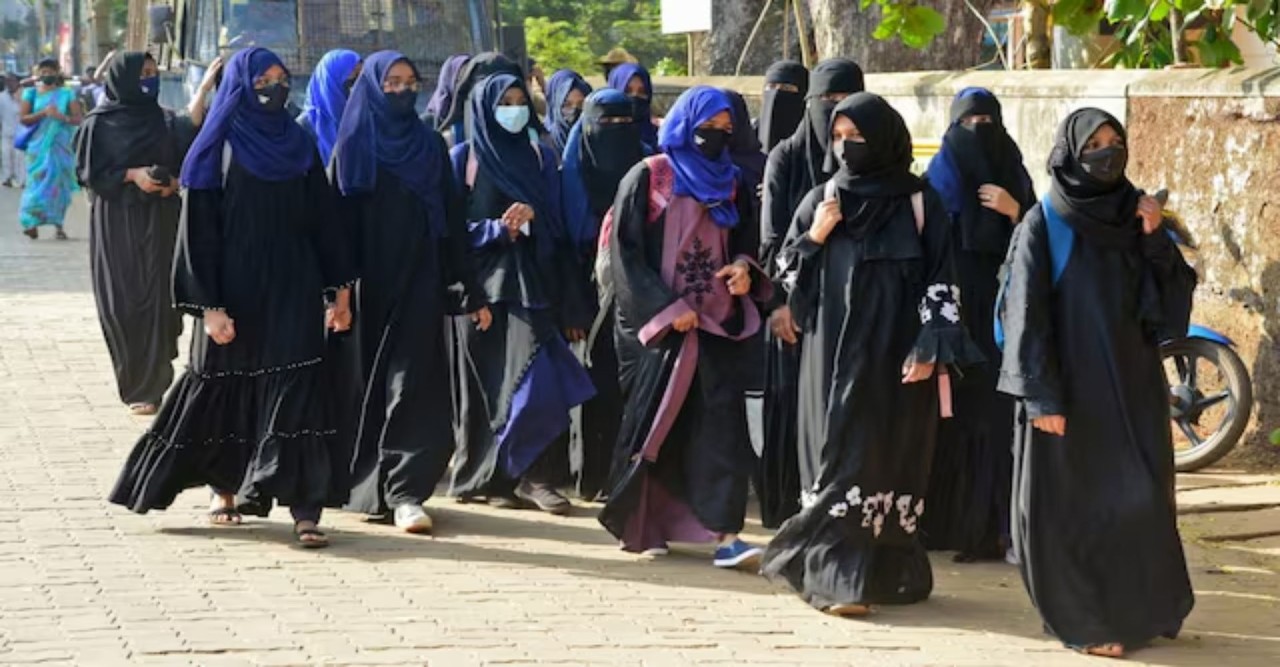 Recently, the Bangladesh Bank, the nation's central banking authority, introduced a set of guidelines for employee attire, suggesting that female employees adopt modest clothing options, such as traditional sarees, salwar kameez with dupattas, or other professional attire. While the guidelines do not explicitly enforce the wearing of hijabs, they do permit female employees to wear plain headscarves or hijabs should they choose to do so.
Additionally, the directive advises against the wearing of short-sleeved tops, short-length dresses, and leggings, further shaping the narrative around acceptable women's attire.
Key Points Regarding the Bangladesh Bank Dress Code Directive:
Modest Attire: The directive emphasizes "modest" attire for all female employees.
Specific Recommendations: It suggests specific garments such as sarees, traditional salwar-kameez paired with dupattas, or other professional outfits designed to reflect both dignity and professionalism.
Hijab Optional: The dress code allows for the option of wearing plain headscarves or hijabs, affirming the importance of personal choice in adhering to cultural and religious values.
Discouraged Attire: Attire deemed inappropriate includes short-sleeved or short-length dresses, as well as leggings, which are considered contrary to the directive’s vision of professional decorum.
Male Employees: Male staff are required to adhere to a formal dress code that includes wearing shirts and trousers, reinforcing a uniform standard of professionalism.
Violations: Any breaches of this dress code will be taken seriously and may be viewed as a disciplinary issue within the institution.
Inquiry: The Governor of the Bangladesh Bank has expressed surprise regarding the backlash and has committed to investigating the implications of the directive and the concerns it has raised.
Clarification: Importantly, the directive does not impose a ban on hijabs or burqas. However, it acknowledges a woman's choice to wear them, indicating a nuanced approach to cultural attire.
Women's status in Bangladesh and other countries: systemic abuse
Since gaining independence in 1971, Bangladesh has grappled with critical issues surrounding the status of women, particularly regarding rape culture and systemic abuse. The alarming prevalence of sexual violence, including rape and gang rape, has gained significant attention in recent years. Despite various commitments to advocate for women's safety and treatment, profound concerns remain regarding their protection and rights in society.
Globally, sexual violence against women is disturbingly common. According to the World Population Review (2020), approximately 35% of women worldwide have experienced sexual harassment at some point in their lives. In Bangladesh, the reported incidence of rape is particularly concerning, with estimates indicating about 11,682 cases per 100,000 people, translating to a rape rate of 9.82. This issue is not confined to Bangladesh; it is a widespread problem that transcends borders.
In India, for example, over 31,000 rapes were reported in 2022, equating to an incident approximately every 16 minutes, as noted in 2019. Contributing factors to these high numbers include declining societal morals, alongside challenges such as illiteracy, unemployment, and poverty. Similarly, in Canada, there exists a notable gender disparity regarding sexual assault victims. Women have a victimization rate of 50 per 1,000, which is significantly higher than the rate for men, at 9 per 1,000, as reported by Statistics Canada in 2021. These statistics emphasize the urgent need for collective action to combat rape culture and to uphold the rights and dignity of women worldwide.
Women's abuse culture in the context of Bangladesh:
Bangladesh, a densely populated nation, is home to approximately 171.5 million people, an astonishing figure considering its land area is a mere fraction of countries like Canada—about 67 times smaller. To put this into perspective, Bangladesh is only 1.2 times the size of New York City, yet it boasts a vibrant and youthful population, with 15 percent comprising children and adolescents. Recently, Bangladeshi citizens were struck with a profound sense of anguish after reading about a horrific incident in which an 8-year-old girl named Asia was brutally gang-raped by her sister's husband, her brother, and her father-in-law. The heart-wrenching photos shared on social media served as a grim reminder of the alarming brutality that permeates our society.
Similarly, the tragic case of 5-year-old Pooja, who fell victim to a local predator named Saiful, only compounds this sorrow. Disturbingly, Saiful has recently been released back into society, underscoring the systemic failures in how we treat such heinous crimes. The incessant rise in sexual violence against young girls demands urgent attention.
According to a report by The Daily Star, in the past five years alone, over 6,000 girls have suffered the unimaginable trauma of rape, while an additional 12,000 have faced molestation and assault in Bangladesh. The brutal murder of Tanu, who met her fate inside a cantonment despite being fully covered and wearing a hijab, raises unsettling questions about the motives behind these atrocities. How can we reconcile such tragic events with the narratives propagated by some religious leaders?
In Bangladesh, these preachers often assert that if girls do not cover themselves adequately, they provoke men to commit acts of violence. Is this truly the interpretation of Islamic teachings? Shouldn’t the emphasis be on men lowering their gaze as a fundamental tenet when encountering women?
This raises an even more troubling contradiction: cases of boys being molested and raped within madrassa dormitories or by other men in society.
Are these boys not also subject to a lack of coverage? It is a perplexing dilemma that continues to haunt Bangladesh society, revealing deep-seated issues related to gender, accountability, and justice.
Social Background of Bangladesh:
The issue of violence against women has emerged as a persistent crisis in Bangladesh, a densely populated Muslim nation grappling with social challenges that cast a shadow on its governmental image and the conscience of its citizens. As highlighted by the World Population Review 2020, Muslims constitute approximately 89.1% of the population, with Hindus making up around 10%, while other religions—including Buddhists and Christians—account for a mere 0.9%.
The overwhelming majority, 98%, communicate in Bengali, embodying the rich tapestry of Bengali ethnic culture that intertwines with the teachings of various traditional religions, prominently featuring Islam. Historically, the nation has thrived on a foundation of religious harmony, pluralism, and diverse ethnic identities. However, a significant shift occurred in 1996 when the newly-elected government amended the constitution, omitting the term "secularism" and ushering in a conservative ideology that promoted a faith-based sociopolitical landscape.
This departure from Bangladesh's inherently pluralistic society undermined its multifaceted cultures. Although a subsequent government would later reinstate secularism as a guiding principle, the constitutional designation of Islam as the state religion remains unaltered. Over the decades, the nation evolved from a secular, multicultural haven into a predominantly Islamic state.
Despite the Islamic faith being predominant, the core teachings and moral tenets of Islam seem to have little resonance with the youth and adults of Bangladesh. This disconnect raises concerns about the deterioration of societal values, norms, and ethics. A pressing question arises: what ails the men and the broader social framework of Bangladesh that allows such disparities to persist?
Why do women and girls frequently feel vulnerable in the realms of home, work, and public spaces? Is there a deficit in the education imparted at homes and schools regarding respect for women and the principles of equality? Merely imposing a dress code on women will not begin to address the profound social issues, such as the pervasive culture of rape.
A fundamental shift is needed—one that involves comprehensive education both at home and in schools, emphasizing respect for women and the importance of gender equality. It is vital to recognize that no child, regardless of their gender, is immune to the threats posed by sexual offenders. Thus, adopting a multifaceted approach that incorporates both preventative measures and robust safety mechanisms is essential.
While immediate interventions are critical, the bedrock for enduring societal transformation lies in fostering moral values and promoting ethical education. This responsibility is not the sole domain of individual families; parents must actively participate in protecting their children and educating them about personal safety. Simultaneously, educational institutions, alongside governmental agencies, bear the obligation of implementing effective policies and frameworks designed to safeguard vulnerable populations—especially children and women—from violence and exploitation.
Dress code imposition can be used to violence against women.
The dress code directive stresses a strong commitment to modest dress for all female employees, aiming to foster a professional environment that respects cultural sensitivities. However, such enforcement can lead to violence against women.
While the intent might be to uphold a certain standard of dress, the implications of banning women’s brief attire by an esteemed institution like the Bangladesh Bank could inadvertently foster an environment ripe for harassment—both within the workplace and beyond. In a country like Bangladesh, characterized as an Islamic republic with prevalent male chauvinist tendencies, such restrictions may be misconstrued as legitimizing harassment, thus aggravating the challenges women face in their daily lives.
In stark contrast, Canada promotes a workplace culture where modest attire is encouraged, but without formal dress codes, allowing women the freedom to choose outfits based on personal taste and comfort, thereby fostering a sense of autonomy and respect.
Despite the many reformative areas within the Bangladesh government—encompassing health, education, environmental issues, and economic concerns—there remains a persistent trend among conservative Muslim groups to impose new regulations on women's attire. These restrictions, enforced by institutions such as the Bangladesh Bank, appear to undermine women's autonomy and propagate the notion that women’s clothing choices should be regulated, thereby limiting their freedoms.
Consequences for violating the Bangladesh Bank's dress code could invoke disciplinary measures. Still, the specific punishments remain ambiguous, casting a shadow of uncertainty over the lives of women striving to express themselves.
Ultimately, the fundamental right to determine one’s attire is a personal and essential freedom that must be upheld. No institution or government should impose restrictions on a woman's choice of clothing; instead, it is crucial to cultivate an environment where women can dress according to their preferences, reflecting their individuality and sense of self.
Dr. Pamela Riviere is a freelance writer and analyst.