
Surrender of Hamas without Palestinian Statehood: No Peace Plan in Sight
খবর প্রকাশিত: ২৩ জুলাই, ২০২৬, ০৫:৪১ এএম

Surrender of Hamas without Palestinian Statehood: No Peace Plan in Sight
Trump posted on Truth Social, "I believe they are ready for a lasting PEACE.”
Dr. Pamelia Riviere
American and Israeli ceasefire plan
The ceasefire plan does not include the Palestinian authorities, nor does it reflect any aspirations of the Palestinians.
Dr. Barghouti expressed his concerns regarding the ceasefire plan, stating that it would effectively isolate Jerusalem from the rest of the occupied Palestinian West Bank. He emphasized that the plan does not engage the Palestinian authorities and fails to address Palestinian aspirations.
According to Barghouti, the proposal provides Israeli Prime Minister Netanyahu with additional time to expand settlements in the West Bank and to gain control over Gaza, ultimately impacting Palestinian lives. He highlighted the absence of discussions surrounding Palestinian self-determination within the plan, categorizing it as not a genuine peace initiative. But rather as a strategy aligned with Trump's personal goal for the so-called Nobel Peace Prize.
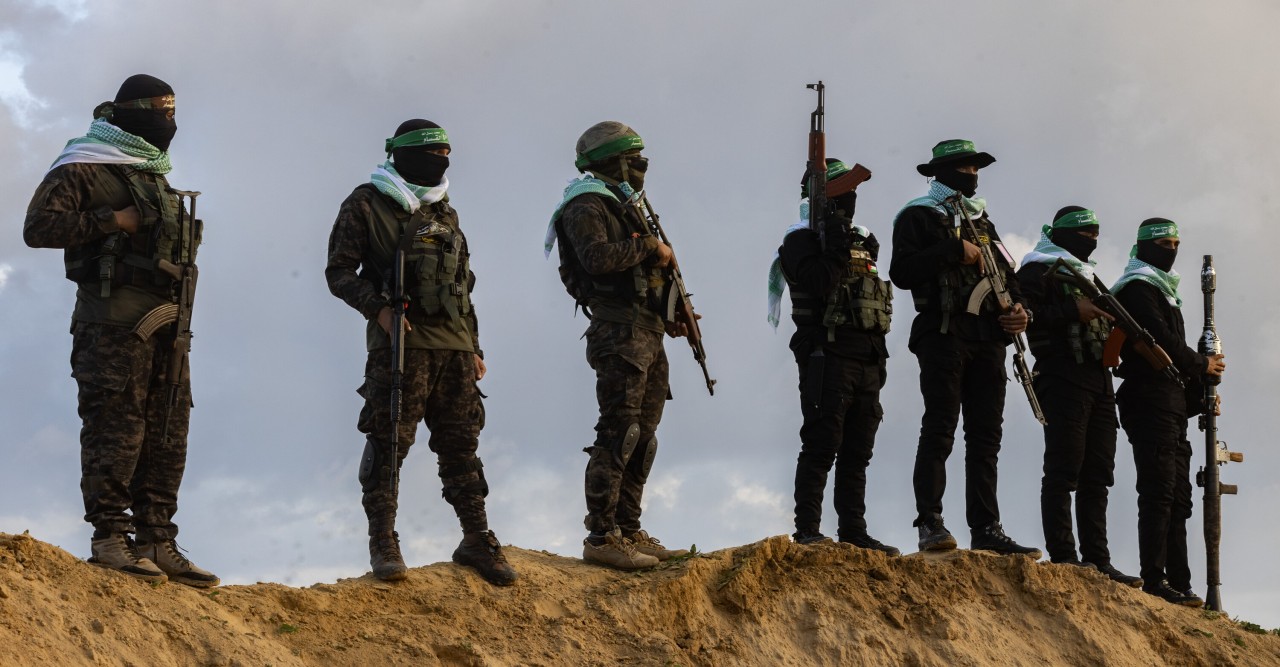 Hamas has officially responded to U.S. President Donald Trump's ceasefire proposal, which includes a 20-point plan established with Israeli Prime Minister Benjamin Netanyahu. In their statement, Hamas expressed approval of the plan’s provision for the release of all captives, both living and deceased, as part of an exchange agreement. They indicated readiness to immediately engage in negotiations through mediators to work out the details.
Additionally, Hamas reaffirmed its willingness to hand over control of the Gaza Strip to a Palestinian body comprising independent technocrats, a move based on Palestinian national consensus and supported by Arab and Islamic entities. However, they mentioned having queries regarding certain points, particularly concerning international administration and the broader future of Gaza, emphasizing the importance of Palestinian consensus on these matters.
While Hamas generally showed a positive attitude towards the proposal, they stipulated that their agreement does not imply blanket support for all elements of the plan. Their acceptance revolves around the willingness to negotiate, particularly on the administration of Gaza.
One notable point of contention remains the issue of disarming Hamas, which is mentioned in the proposal, and whether it will accept any terms related to this matter. The urgency of the situation is underscored by Trump’s stern ultimatum, marking a deadline for responses. This context suggests that Hamas may be carefully navigating its response, potentially ready to discuss the matter as the deadline approaches further. There remains a window for negotiation, but Hamas has reservations that need clarification before any final decisions are made.
Trump’s 20-point plan
It feels like a profound betrayal that President Trump acquiesced to every demand made by Netanyahu, proposing a 20-point plan in favour of Israel. In doing so, he altered the last diplomatic plan that had garnered the agreement of Arab leaders.
This begs the question: why have many Arab and Muslim rulers chosen to back Netanyahu’s controversial Gaza plan?
Currently, Netanyahu appears increasingly desperate, intent on expelling Palestinians from the northern territories, halting food aid, and aggressively seeking to consolidate control over the West Bank.
In recent statements, Israeli Prime Minister Benjamin Netanyahu has issued a stern warning to Hamas, indicating there will be severe consequences if the group does not release the captives it holds in Gaza. This warning comes as negotiations for a ceasefire have reached an impasse. Hamas has countered by accusing Israel of trying to revert to the initial stages of their ceasefire agreement. Israel is pushing to prolong the current phase instead of advancing to the next.
The international community has expressed significant concern following Israel's decision to block aid deliveries to Gaza, with countries such as Egypt, Qatar, and Jordan condemning this action as a clear violation of both the ceasefire and humanitarian laws.
There are claims that U.S. political and financial landscapes are influenced by pro-Israel groups, suggesting that this may inhibit more critical stances toward Israeli actions. As the conflict continues, the situation remains dire for Gaza. Reports indicate a severe humanitarian crisis, with minimal movement allowed within the region.
Olmert’s Plan
Former Israeli Prime Minister Ehud Olmert unveiled a previously unseen map, known as the "napkin map," which was created several decades ago. According to a BBC report dated February 23, 2025, this map is believed to hold the key to achieving peace in the Middle East.
"In the next half-century, you won’t encounter an Israeli leader willing to propose what I am asking of you right now. 'Sign it! Sign it, and let us change the course of history!' It was the year 2008, and Israel's Prime Minister, Ehud Olmert, was passionately urging the Palestinian leader to seize a once-in-a-lifetime opportunity for peace—a two-state solution that now seems, to many, a distant dream. If this bold proposal had been embraced, it would have led to the establishment of a Palestinian state encompassing over 94% of the occupied West Bank.
The map Olmert had meticulously crafted has since taken on an almost legendary aura, shrouded in mystery and various interpretations, yet he has refrained from unveiling it to the media—until now.
Olmert's plan included a blueprint that maintained a mandate covering a small, influential area, inclusive of Jerusalem. It designated the most deprived lands of Palestine, such as the arid Negev Desert, and territories recognized today as the West Bank and Gaza Strip, for the Arab population. Meanwhile, it reserved the majority of the coastline, along with some of Palestine's most fruitful agricultural lands, for Israel. The intricacies of this plan reflect the complex interplay of hope and hardship that has defined the region's tumultuous history." Netanyahu and Trump are far from the Olmert Plan.
Evangelical leaders of the US urge for a sovereign West Bank
What an astonishing display by confident Evangelical leaders! They appear to be lacking compassion, common sense, and a commitment to peace in the Middle East. Their religious fervour has severely clouded their ability to exercise sound judgment. Israel’s recent decision to rename the West Bank—historically known as Judea and Samaria—serves as a bold assertion of its claim that this territory is rightfully part of Israel. This controversial move not only highlights Israel's stance but also symbolizes the complexities surrounding the recognition of Palestinian statehood.
Recently, over 200 Evangelical leaders, convened by the Family Research Council, signed a letter directed at Trump, expressing their support for Israel’s sovereignty over Judea and Samaria. This raises the question: where does the United States truly stand as a global leader amid such tumultuous geopolitical shifts?
The West Bank annexation means no Palestine
During a meeting with Arab and Muslim leaders on Tuesday, President Donald Trump assured them that he would not permit Israeli Prime Minister Benjamin Netanyahu to annex the West Bank, according to six sources familiar with the discussion. Trump was adamant about this commitment, emphasizing that Israel would not be allowed to incorporate the West Bank, which the Palestinian Authority, not Hamas, govern. However, despite Trump's assurances, a ceasefire to end Israel's ongoing nearly two-year conflict with Hamas remains elusive.
“We want to end the war in Gaza. We’re going to end it. Maybe we can end it right now,” Trump told the press. During the meeting with the Arab leaders, he further said, “This is my most important meeting,” he continued. “But this is the one that’s very important to me because we’re going to end something that should have probably never started, as Times of Israel reported.”
No self-determination rights
According to Al Jazeera, the plan sees no role for Hamas, which the US and Israel have demanded must be disarmed and eliminated. However, there is no description of the Palestinians' self-determination rights.
Arab leaders have been frustrated by Trump’s opposition to the recognition of a Palestinian state and his continued support of Netanyahu’s assault on Hamas, which expanded beyond Gaza earlier this month when Israel tried to assassinate top Hamas officials, the peace negotiators, when they were in Qatar for peace talks. Going into Tuesday’s meeting, they aimed to impress on the U.S. president that any Israeli incursion into the West Bank would likely lead to the collapse of the Abraham Accords, two of the people familiar with the conversation said.
The signature foreign policy achievement of Trump’s first term, the accords marked the normalization of relations between Israel and several Arab nations.
The decision by a number of top U.S. allies to recognize a Palestinian state has prompted calls within Israel on Netanyahu to annex all or parts of the West Bank. Some of the far-right members of his government see the current moment as an opportunity to realize the Israeli right’s long-sought goal of absorbing the territory. With Israeli elections taking place next year, Netanyahu may see an opportunity in doing something on this to appeal to hard-line supporters.
Under Netanyahu, Israel has already done much to extend and solidify its de facto control of the West Bank, including expanding Jewish settlements in the occupied territory and tightening its security presence there.
Arab and European officials have warned that formal annexation of the West Bank would all but destroy any last hopes for a two-state solution. Arab states have said it is a red line that would halt any hopes for Israel’s further integration into the Middle East.
The 2020 Abraham Accords came after Israel had threatened to annex the West Bank, and the United Arab Emirates offered to normalize ties in exchange for an Israeli promise not to do so, helping to kick off the U.S.-brokered effort that the Trump team hopes to expand.
Trump, who was expected to present such a plan on ending the war, wants Arab and Muslim countries to agree to send military forces to Gaza to enable Israel’s withdrawal and to secure funding for transition and rebuilding programmes, according to US-based media outlet Axios.
Lasting Peace, who will ensure it, Hamas or Netanyahu?
On Friday, President Donald Trump urged Israel to immediately cease its bombing campaign in Gaza, following Hamas's agreement to release hostages and accept certain provisions outlined in a U.S. plan aimed at resolving the ongoing conflict. However, critical issues such as disarmament remained contentious and unresolved. In response to Trump's appeal, Benjamin Netanyahu's office announced that Israel was preparing for the "immediate implementation" of the initial phase of the Gaza plan, which hinged on Hamas's commitment to release Israeli hostages.
Does Netanyahu believe in lasting peace?
According to a report by Sky News, Trump emphasized that Hamas was open to negotiations for a lasting peace, yet the complexity of the situation raised questions about Netanyahu's reliability as he continues military operations.
Despite Hamas's agreement to be part of the U.S. peace proposal, they expressed a desire for amendments to address further concerns regarding Gaza's future and the rights of Palestinians, asserting that these matters were still under discussion. This revelation came shortly after Trump issued an ultimatum to Hamas, demanding acceptance of the peace plan by Sunday or else face severe repercussions.
Amid the ceasefire agreement, bombing and killing continue by Israel
While Trump has called for a halt to the bombings, Netanyahu's military actions persist unabated. His government has been accused of committing atrocities, as evidenced by a report from the BBC revealing that, in just 24 hours leading up to midday Friday, Israeli military operations resulted in the tragic deaths of 63 individuals.
The offensive in Gaza City has intensified, with Israel's defence minister asserting that Israeli forces are "tightening the siege" around the city. As evacuations were mandated in the face of the Israeli offensive, hundreds of thousands of residents from Gaza City were forced to flee to designated "humanitarian areas" in the south. Yet, fears persist that hundreds of thousands more remain trapped in perilous situations. The defence minister has cautioned that anyone who chooses to stay would be considered “terrorists and supporters of terror.”
James Elder, a spokesperson for UNICEF, vehemently criticized the notion of a safe zone in southern Gaza as “farcical,” highlighting the tragic reality that bombs continue to rain down with chilling regularity. He lamented that schools, which had been designated as temporary shelters for the displaced, are frequently brought to ruin by bombardments, showcasing the harrowing conditions faced by civilians amidst the chaos.Dr. Barghouti addresses the core of the matter: What is the true objective of a proposal that permits ongoing settlements and undermines Palestinian self-determination? It is not a peace plan but rather one that aims for the contrary. He believes that a fair and lasting peace cannot be achieved without the right to self-determination. Israel does not seek a two-state solution, nor does it desire a single state; what does Israel actually want? According to Barghouti, Israel seeks ethnic cleansing.
Dr. Pamelia Riviere is a freelance writer and analyst.