
It is imperative to ensure compulsory and free education up to class XII for both boys and girls- Dr. Pamelia Riviere
Akbar Haider Kiron প্রকাশিত: ২৩ জুলাই, ২০২৬, ০৪:২৩ এএম

It is imperative to ensure compulsory and free education up to class XII for both boys and girls
It's important to hold off on making any unrealistic commitments at this stage, as we can't make promises we can't keep.
Dr. Pamelia Riviere
Imagine a future where every child in Bangladesh, regardless of gender, has the opportunity to thrive! It's time to champion a movement for compulsory and free education up to class XII for all. Let's empower our youth with the knowledge and skills they need to soar!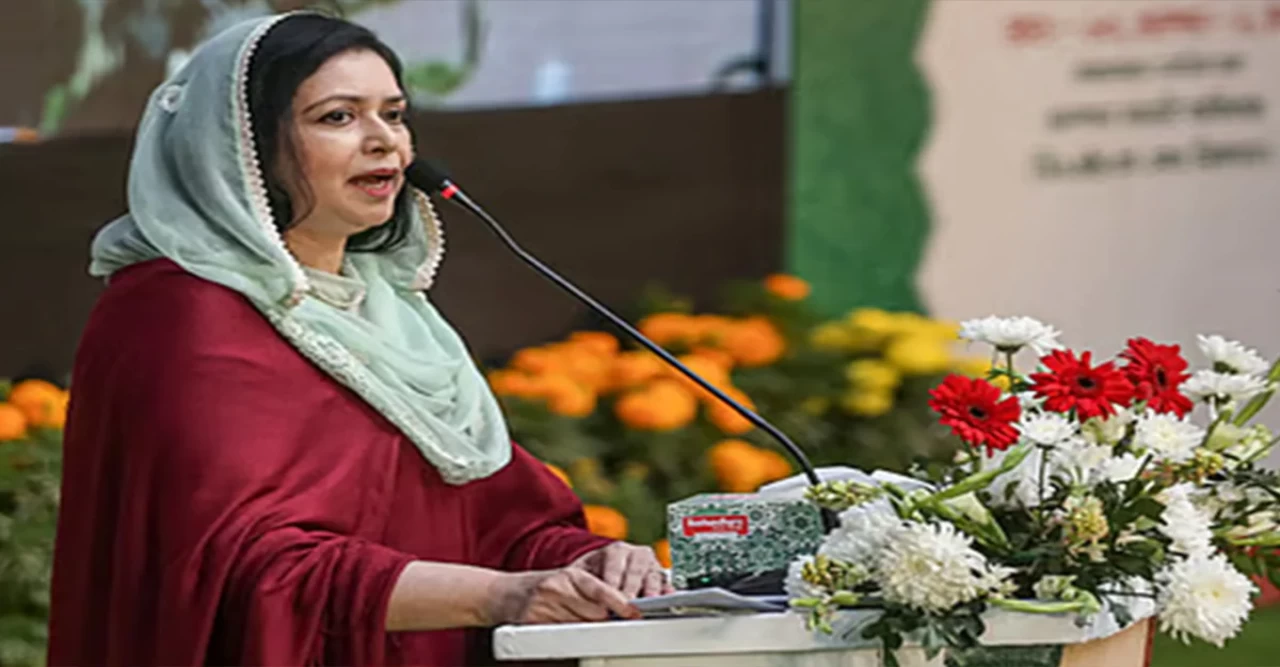 On February 8, 2026, the Daily Star reported that Dr. Zubaida Rahman, the wife of BNP Chairman Tarique Rahman, announced that the party aims to provide girls with access to higher education up to the master's degree level. “We aspire to guarantee their [women's] safety and security, safe housing and transportation, and daycare facilities at workplaces, enabling every mother to work in peace,” she remarked. She also underscored the establishment of a Women's Support Cell, stating, “We will offer financial assistance and skill development to female entrepreneurs. We intend to boost the participation of women in the formal job market.” Dr. Rahman addressed the safety issues that many garment workers encounter when traveling home at night. She asserted that garment workers should be entitled to maternity leave, expressing, "We aim to secure six months of maternity leave for them." Dr. Rahman reflected on the struggles of an underprivileged girl child who constantly fears becoming a victim of child marriage and having her dreams thwarted. "Today, we are also considering the working woman and the college and university student who endures uncomfortable and unfair treatment daily and cannot travel without anxiety," she stated. She highlighted the significance of the Parent Maintenance Law and recounted the heartbreaking story of a housewife who resorted to suicide due to her inability to support her children. Dr. Rahman's speech and commitment are highly praiseworthy. If the BNP is victorious, the citizens of Bangladesh will closely examine these promises, which must be taken into account thoughtfully.
To early to make promises
Regarding women's postsecondary free education plan, however, it is too early to make such a contentious commitment when there is no education budget for primary and secondary schools in Bangladesh. The current situation concerning educational funding in Bangladesh raises significant concerns, especially regarding the primary and secondary education sectors.
It is crucial to prioritize the establishment of a solid education budget before making any controversial commitments. Education up to grade 10 should be provided free of charge, and students must receive a comprehensive national curriculum that includes more science, math and multiple intelligence than just religious or Qoumi education.
Moreover, it is important to question whether there is a sustainable system in place to manage the numerous colleges and universities across Bangladesh, and if these institutions are adequately funded by the government.
The next government should place a strong focus on strengthening the primary and secondary education system, which remains vulnerable.
Postsecondary finance system in Canada
In contrast, even in Canada, post-secondary education is not free.
For example, in Ontario, students from low-income families can access OSAP loans to help cover their education costs. Students are required to repay these loans after graduation, once they secure employment. This highlights the complexities of funding education and the need for viable solutions that ensure accessibility and quality.
During the 2023/2024 academic year, public postsecondary enrollment in Canada reached around 2.3 million students. Notably, women represent a significant majority, consistently comprising over 55-60% of both students and graduates in Canadian postsecondary education.
In contrast, despite Canada’s robust economy, it has not implemented free postsecondary education for male or female students. This raises a significant question when considering countries with more challenging economic circumstances, such as Bangladesh, where the education budget is considerably limited. In such contexts, it is difficult to envision how the government could fund the provision of free postsecondary education for female students.
Higher education status of female and male students in Bangladesh
For the most accurate and up-to-date enrollment statistics for universities, vocational, and technical colleges in Bangladesh, the Bangladesh Bureau of Educational Information and Statistics (BANBEIS) serves as the primary source. While specific, consolidated figures for all post-secondary male and female students are not easily accessible in one total, the 2023 data indicates that the gross enrollment ratio for tertiary-level education stands at 20.18%. Notably, university enrollment has exceeded 1 million students, with approximately 37.5% of these students being female.
It is true in Bangladesh, there is a notable gender gap in post-secondary (tertiary) education, with female enrollment at universities standing at approximately 36%. This discrepancy occurs despite achieving near equality in secondary education levels, as reported by Total Student Care. The total enrollment in UGC-recognized universities exceeds 4.7 million students; however, female participation significantly declines in private institutions, according to University World News.
As of 2023, only about 5.38% of the female population aged 25 and older has attained at least a post-secondary education. This indicates that even though girls tend to equal or surpass boys in secondary schools, their presence at the college and university levels diminishes due to various economic and social factors, as explained by Total Student Care.
33 million children out of school
It is deeply troubling to witness the ongoing educational crisis in Bangladesh, where millions of children are deprived of schooling due to a complex interplay of factors such as poverty, climate-related disasters, and inadequate infrastructure. Current estimates paint a stark picture: reports suggest that over 26 million children are currently out of school, while UNICEF data and various news reports indicate that climate-induced disruptions in 2024 alone have impacted the education of up to 33 million children across the country. The necessity of education up to class 12 cannot be overstated; it should be made compulsory for every child, regardless of their background.
The suggestion of implementing separate financial support systems for women is misguided and counterproductive, especially when between 24 to 33 million children of all genders are currently not receiving an education. These children need more attention. Addressing this crisis requires a unified approach that prioritizes access to quality education for all children in Bangladesh, ensuring that no child is left behind.
There are numerous pressing issues in the education sector, particularly for primary and secondary children and the 33 million currently out of school. It is premature to make such an impulsive commitment when not enough education budget has been allocated to primary and secondary schools in Bangladesh yet.
It is crucial to exercise caution and refrain from making any unrealistic promises at this juncture, particularly because the interim government is currently facing several constraints that may hinder its ability to fulfill such promises by a new government. Given the complexity of the economic landscape and the multifaceted challenges involved, it is essential that all parties involved understand the importance of setting realistic expectations that can be met. This careful approach helps to maintain trust and accountability in the long run, ensuring that any commitments made are both feasible and sustainable.
Therefore, to reduce disparity in Bangladesh, it is essential to ensure that education is both mandatory and free for all children, regardless of gender, up to class XII. This initiative aims to provide equal opportunities for boys and girls, empowering them through education and helping to promote a more equitable society. By making education accessible without cost, the country can foster a generation equipped with knowledge and skills necessary for personal and societal development.
The writer is an educationist and a freelance analyst.