
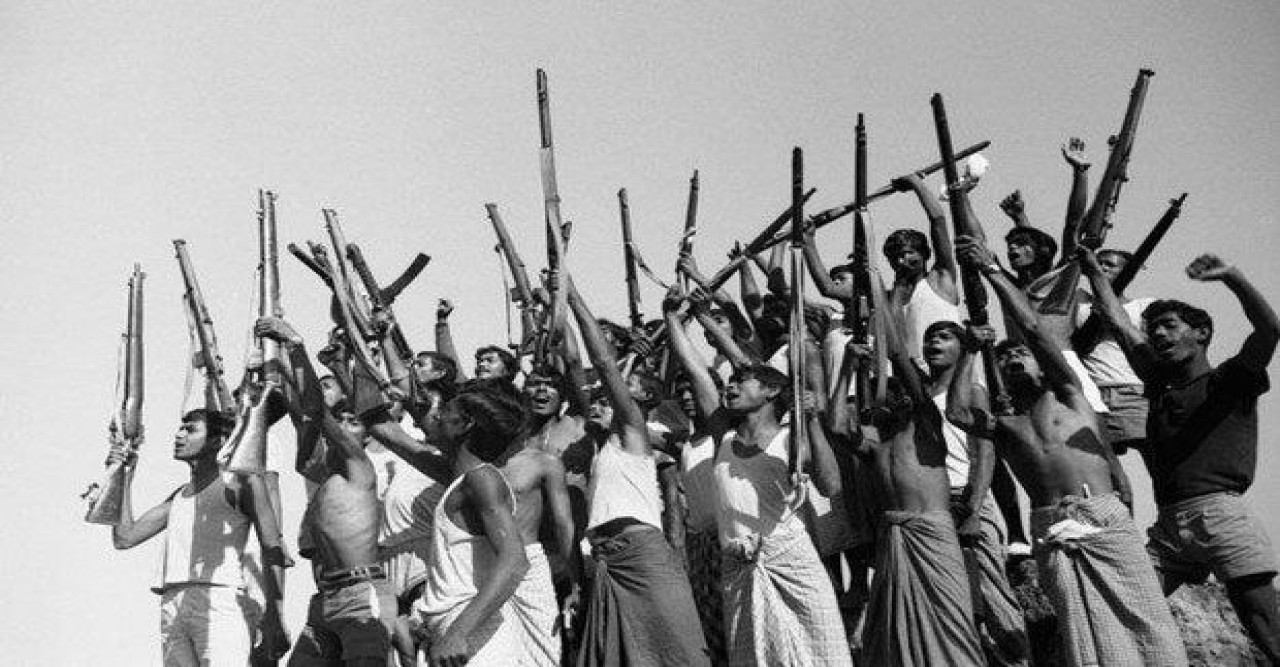
Did you see what I saw? I have seen Bloody 1971, the Bangladesh Liberation War!
Rise! It's time to stop flapping their wings, the Bengal's dark vultures!
Dr. Pamelia Riviere
Did you witness the same haunting past as I have? I've glimpsed the harrowing events of 1971—the Bangladesh Liberation War. The echoes of that tumultuous time still resonate deeply within me.
It's time to silence the voices that oppose the cries for justice and the memories of the bloody war of 1971. Let's search for the truth, unite and reclaim Bangladesh's birth narrative. Among the 6 percent of the Bengali Army, my elder brother, who was awarded the prestigious Sword of Honour for his remarkable leadership and excellence, served as a dedicated instructor at the Pakistan Military Academy, Kakul, before 1971. After completing his studies at the Bangladesh University of Engineering and Technology (BUET) in 1964, he joined the Pakistan Army, driven by a strong sense of duty and patriotism.
In 1971, amidst the turmoil of the Bangladesh Liberation War, he found himself trapped in a refugee camp in Pakistan along with his family, enduring the hardships of displacement and uncertainty. My fourth brother, who was in the process of graduating from Forman Christian College, University, also faced a similar fate, remaining stranded in Pakistan during this critical period. My elder brother, the second sibling, was subjected to severe hardships as the Pakistani army imprisoned him for an extended duration. During his confinement, he became a victim of the brutal torture and oppression inflicted by the Al Badr Razakars, a paramilitary group notorious for their atrocities. Sadly, he is no longer with us today, a poignant reminder of the sacrifices endured during a time of profound conflict and struggle.
Our beloved brother and cousin, the eldest son of our family's eldest uncle, served valiantly in the East Bengal Regiment. He was tragically martyred during a fierce encounter, bravely shot by the Pak Army in Barak. His dedication to our homeland epitomized courage and sacrifice. Two other cousins, also sons of the same uncle, were serving alongside him in the East Bengal Regiment. Fortunately, they managed to escape the chaos of that fateful day, evading the onslaught while mourning the loss of their brother. Another cousin, son of the same uncle who served in the Air Force, found himself trapped in Pakistan during the conflict, facing an uncertain fate. After the war ended, two freedom fighter brothers—my eldest uncle’s son and my aunt's son—returned home as heroes, driving into our neighbourhood in a rugged jeep, their guns proudly slung over their shoulders. The sight of them, battle-worn yet triumphant, filled the air with an overwhelming sense of pride and relief.
I vividly remember the day when my brave freedom fighter cousins and their comrades gathered at our home for lunch. The warmth of camaraderie and the aroma of home-cooked meals filled the room, creating an atmosphere of celebration and gratitude. As a 9-year-old, witnessing these real-life fighters was a surreal experience; it felt like a scene from a dream, forever etched in my memory. Their bravery and sacrifice made them heroes in my eyes, and I will always cherish the honour of having shared that moment with them.
Neither of these brothers is alive today! Their martyred souls do not know how the brave freedom fighters are being insulted by the fundamentalist group today, on the very soil of Bangladesh, where they fought to liberate. I witnessed the profound suffering of my family during the Liberation War of 1971. I saw my father, mother, uncle, and aunt weep for lost loved ones and a future filled with uncertainty.
The body of my eldest cousin, brutally murdered, has never been found—a haunting void that lingers in our hearts.
I remember a chilling moment when I saw my father, his spirit crushed, bringing a few floating, lifeless bodies to the shore. Their hands were bound tightly behind their backs, a heartbreaking image of desperation. My father searched through the gruesome pile of bodies for his son, hoping against hope to find my brother’s familiar face among the fallen.
The terror of losing another loved one, his own son, overwhelmed him. At the same time, my heart shattered as I witnessed his silent tears flowing down his cheeks—a reflection of the unbearable anguish and despair that our family endured during those dark days.
With my heart heavy and my father distraught and helpless beside me, I searched desperately for my brother’s face among the lifeless bodies bobbing in the Brahmaputra River. This haunting image encapsulated the horror our family endured during the Liberation War of 1971, a violent conflict that etched a deep wound in our hearts and forever altered our lives.
The sight of my mother’s tears rendered us all motionless, consumed by an overwhelming sense of despair. Yet, despite the anguish surrounding me, I didn’t cry that day. A whirlwind of anxiety churned within me as I grappled with thoughts of my brothers, but as a young child, it was nearly impossible to grasp the full magnitude of the chaos erupting around us during the war. It was December 1971—a month forever seared in my memory.
Oh, December! On the tragic date of December 14, 1971, a heartbreaking atrocity unfolded, with 1,400 brilliant intellectuals mercilessly executed. Their lifeless remains were discovered in the mass graveyard at Rayer Bazar, a stark reminder of the cruelty that had engulfed the entire nation. Such a sorrowful December, etched in grief and loss, serves as a testament to the profound sorrow that lingered in the hearts of countless families, including mine.
Whose eyes did you witness the events of 1971 through? From whose perspective are you viewing the liberation struggle? To the young generation of Bangladesh: Are you approaching the history of our nation through the lens of the Rajakars, Al-Badr, Al-Shams, or the perspective of Pakistan?
If so, you are aligning yourself with the wrong side of history in the context of Bangladesh’s fight for liberation.
I urge you to pick up books that document the truth, delve into the accounts of those who lived through the war, and absorb the knowledge that will enrich your understanding of 1971.
See the war through my eyes, and through the eyes of the millions who endured unspeakable suffering—listen to their life stories and the legacy of their struggles—rather than adopting the narratives pushed forward by anti-liberation propagandists of that time.
It is time to stop the harmful rhetoric and false narratives that diminish the sacrifices made during the liberation of Bangladesh. No longer can we allow the voices that speak out against the sacrifices made for our independence to drown out the truth. The history of Bangladesh deserves to be honoured and understood in its full context, for the sake of those who fought valiantly for our freedom and for the future generations who must know their story.
It's time to stop the endless flapping of wings, those Bengal's dark vultures! Rise! We must silence the voices that oppose the urgent cries for justice and the haunting memories of the bloody Liberation War of 1971. This is our moment to unite and reclaim the actual narrative of Bangladesh's birth—a narrative rich in resilience, sacrifice, and hope.
Let us come together to rediscover and celebrate the powerful story behind Bangladesh's independence, a tale woven with the courage of countless individuals who fought for freedom and dignity. Join the movement to reclaim our narrative and honour the legacy of those who laid down their lives for our right to exist as a sovereign nation. Together, we can ensure that the true essence of our struggle is remembered and respected.
The writer is a freelance analyst.